A Specvista product
Ubriot
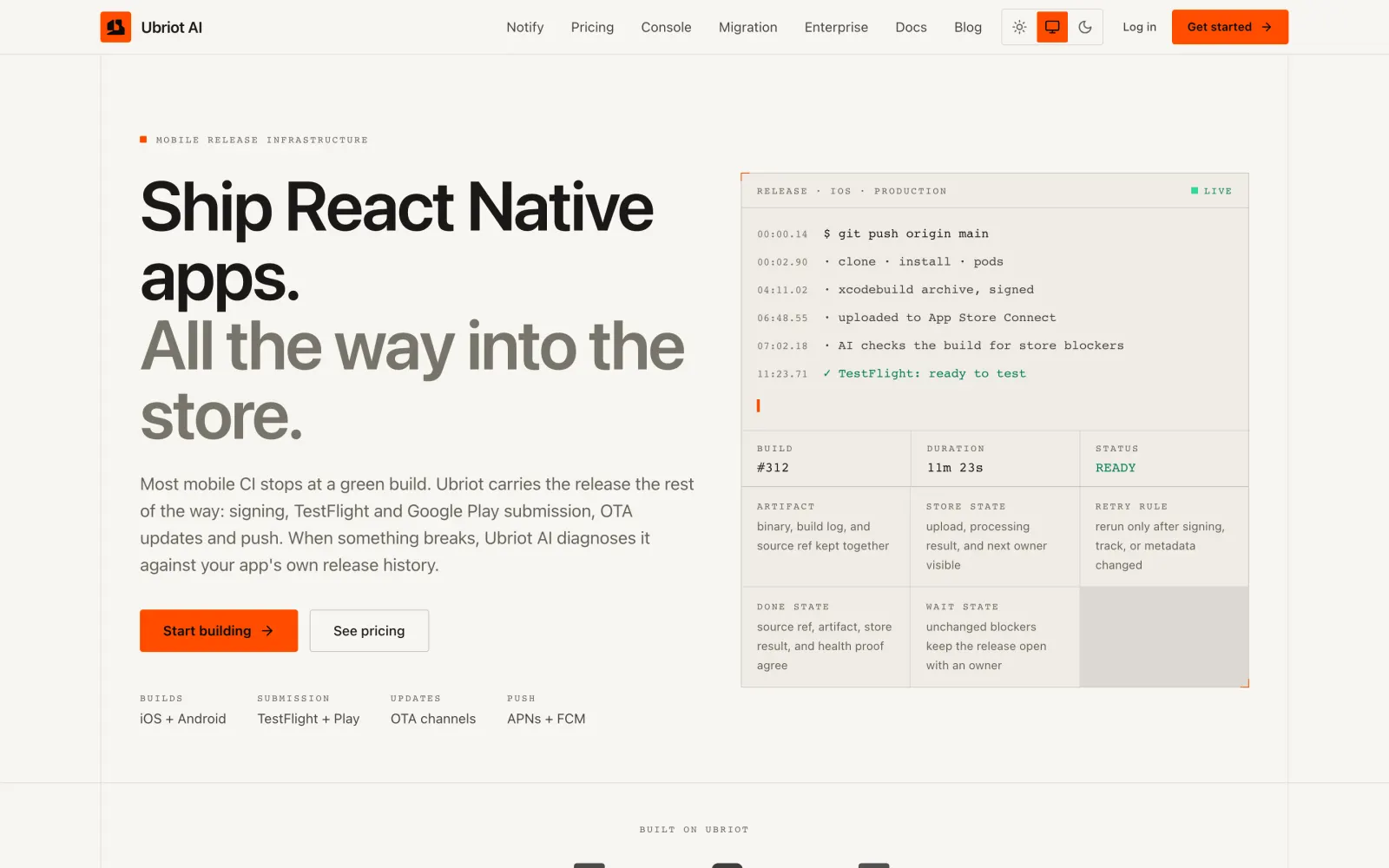
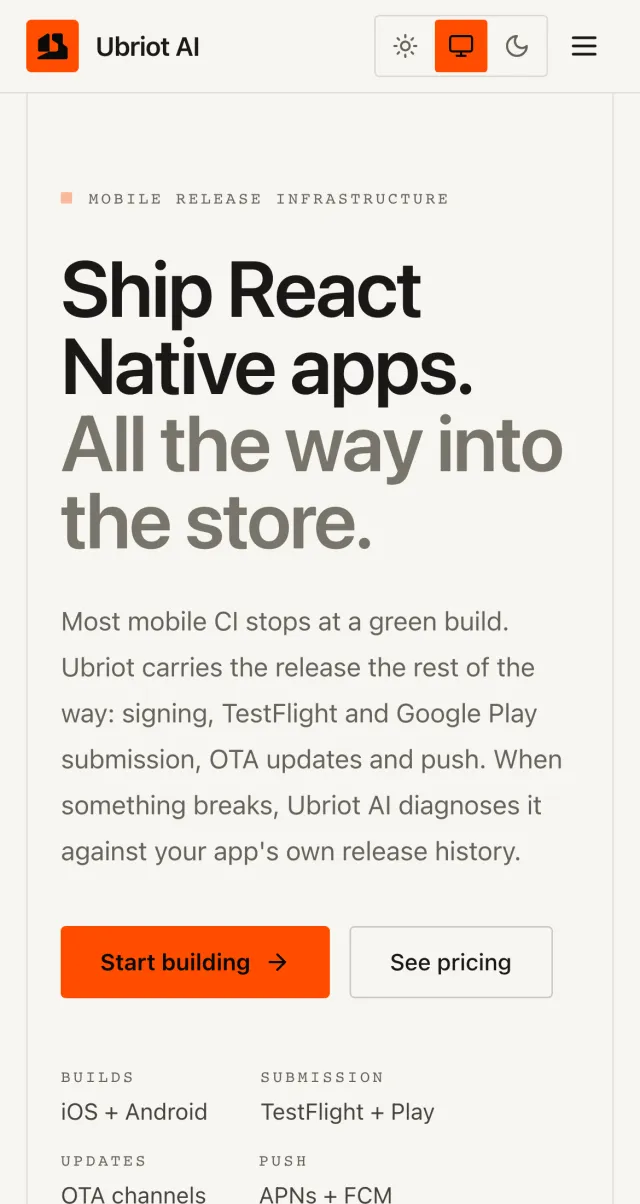
Release infrastructure for React Native apps. Build, sign, submit and update iOS and Android apps from one place, with a way back when a release goes wrong.
The short version
- What it does
- Builds signed iOS and Android apps, submits them to TestFlight and Google Play, publishes over-the-air updates to channels and sends push notifications through APNs and FCM.
- When a release breaks
- Reads the failed build log and points to a likely cause using the app's own release history. Warns before an over-the-air update that would not match the runtime people are on, and offers a rollback when backend health drops after a release.
- Who it is for
- Teams shipping React Native apps, Expo or bare, who want builds, store submission and updates in one place.
- How you use it
- A web dashboard, the ubriot command line tool, an MCP server for AI coding agents, and SDKs for updates and push.
What it does
Builds and store submission
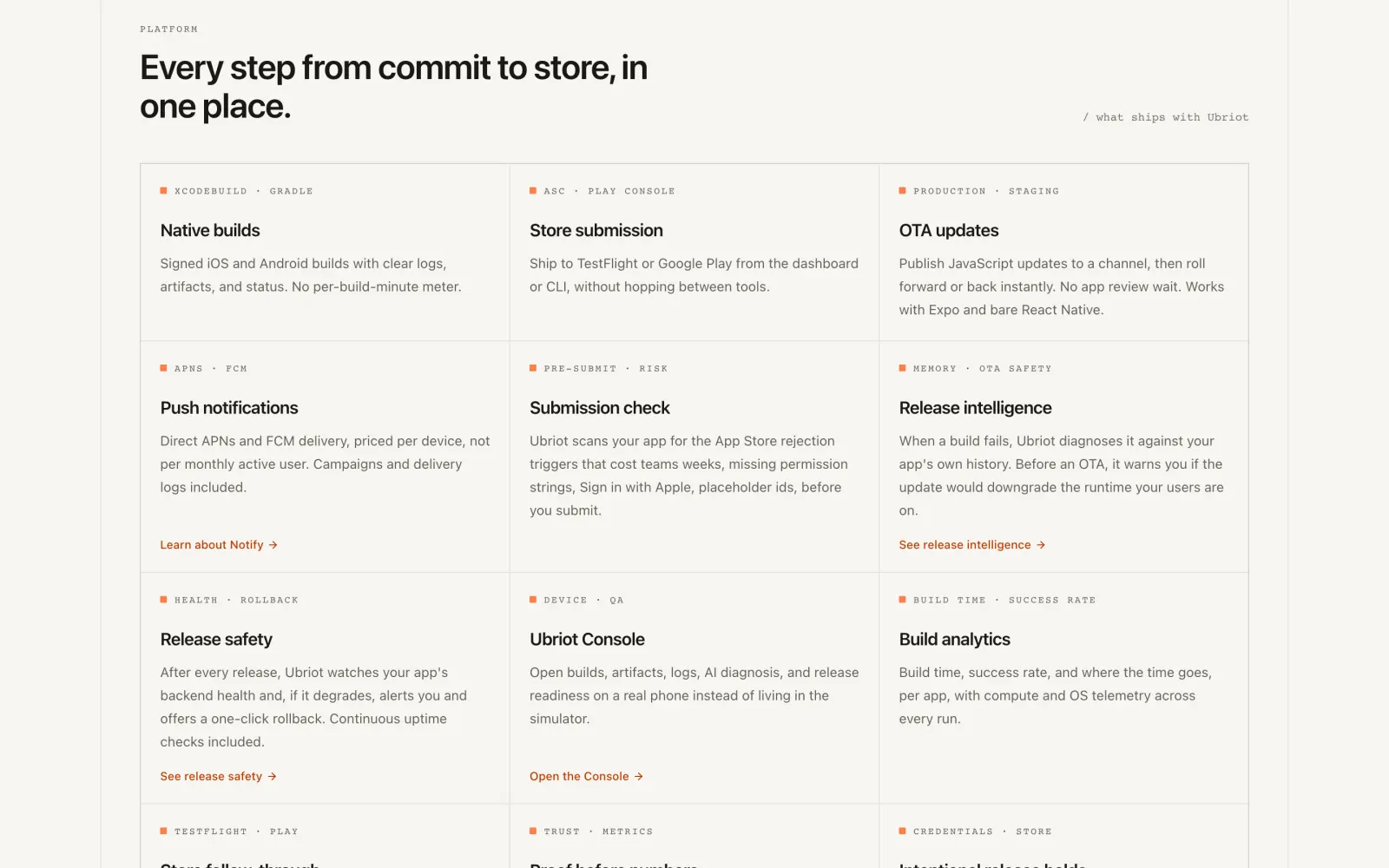
Signed iOS and Android builds with their logs and artifacts kept together, then sent to TestFlight or Google Play from the dashboard or the command line.
Over-the-air updates
Publish JavaScript updates to a channel, then roll forward or back without waiting for app review. Works with Expo and bare React Native.
Push notifications
Direct delivery through APNs and FCM, with campaigns and delivery logs, priced per device.
Release intelligence
A first diagnosis of failed builds, a pre-submit check for common App Store rejection causes, and a warning before an update would land on the wrong runtime.